
Ship Fast, Find Flaws First: Pentesting Your Apps With Strix


Strix is an open-source AI pentesting tool for source code, web apps, and APIs. It investigates security flaws such as broken authorization, injection, and business-logic errors, then produces findings with evidence and remediation guidance.
For your own apps, use an assessment of the staging environment as part of preparing a release. Review confirmed findings, fix their causes, and verify the fixes alongside your normal tests. AI can accelerate development; security checks need a place in that shorter release cycle. Finding a vulnerability does not automatically assign it a CVE identifier.
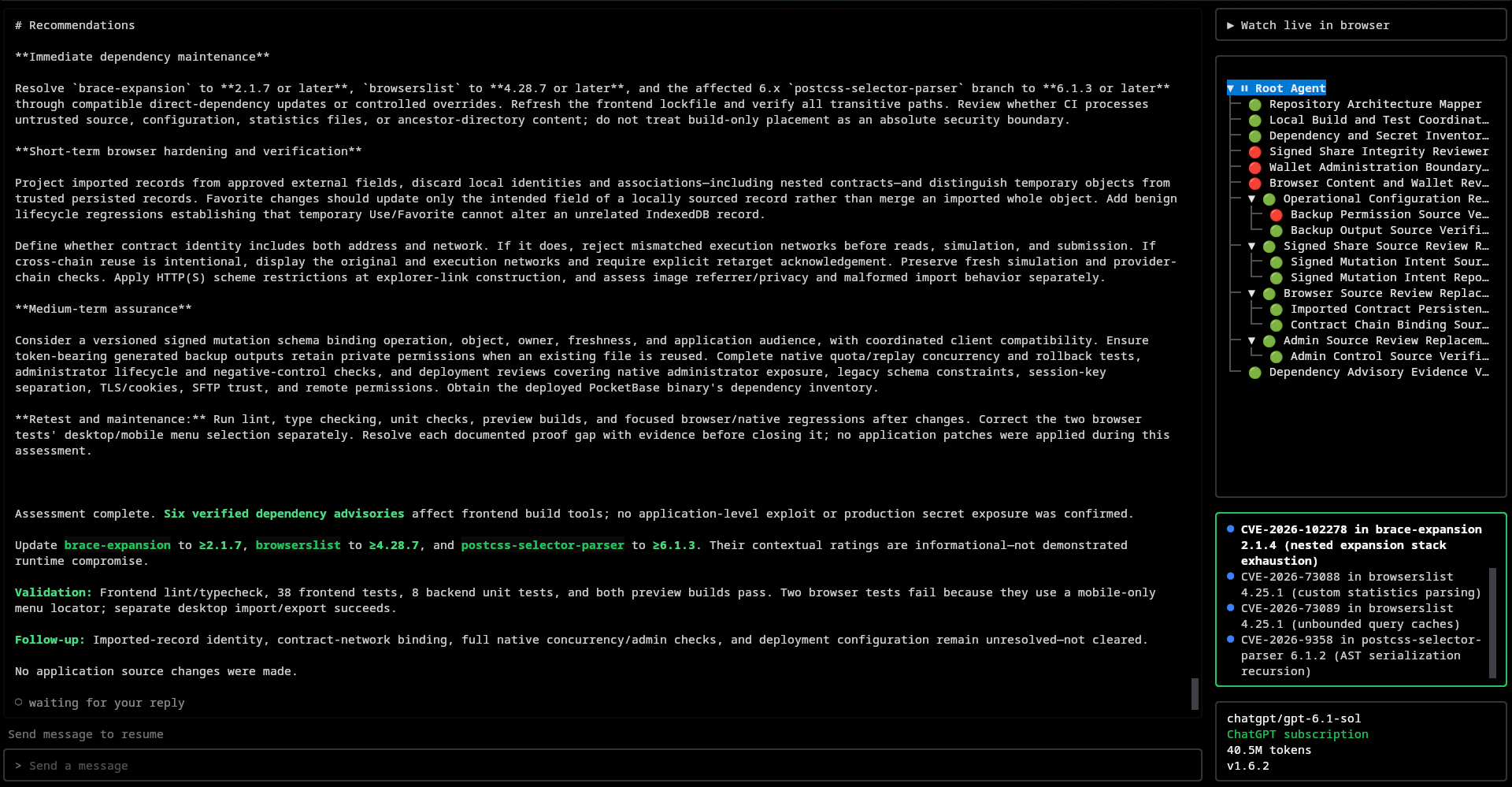
After the run, open the generated run folder inside strix_runs/ in the directory where you ran the Strix command. Give penetration_test_report.md to your coding agent and ask it to repair the reported vulnerabilities. Review the changes and verify the fixes before releasing.
For a repeatable audit, install the standalone strix-audit skill and invoke it from Codex, Claude Code or AGY. It uses OpenRouter with DeepSeek V4.1 Flash by default, or GLM 5.3 when explicitly selected. An optional preset can narrow provider selection. The skill reviews a frozen repository snapshot and keeps reports outside the repository. Restricted source review is the default; full audit mode must be selected explicitly and uses a disposable copy for validation.
For the complete dependency-to-remediation procedure, use security-audit: collect ICU Security MCP findings, verify and fix applicable preliminary issues, rescan the changed tree, run the independent Strix audit, then verify and fix confirmed report findings. Its separate correctness and on-chain diagnosis routes do not automatically start a paid audit.
Choosing a cost effective model
DeepSeek V4.1 Flash is a budget recommendation from Strix's Discord community. In an October 1, 2026 OpenRouter snapshot, Wafer listed $0.05/M input, $0.025/M cached input, and $0.44/M output, supported tool calling, and reported 99.90% uptime over the preceding 24 hours. These are one provider's posted rates, not an average.
Cheap cached input is only part of the bill: uncached input, output, and repeated assessments all add up. A subscription can make regular pentesting more affordable if the work fits its included allowance; compare its price and usage limits with your expected API spend.